edgeless
, on this new poetry title of mine, now available;

edgeless is written as a collection of poetic sequences that illuminate the extraordinary ordinary, travelling across time and space as letters to family, friends, and contemporaries. From epistolary notes composed to his wife during her time at Banff, and a Covid-era call-and-response with Denver poet Julie Carr, to an elegy for his friend, the late Prince George poet Barry McKinnon, the poems in edgeless hop, skip, and jump through everyday intimacies and commentary. With mclennan’s usual flair and flourish for acrobatic, inventive language, edgeless writes the world from within, as his words leave you pressed right up against it.
A cluster of clusters, or a suite of sequences. As I’ve said elsewhere, edgeless (Caitlin Press, 2026) sits as one of a pair of extras amid the “smaller” trilogy: the book of smaller (University of Calgary Press, 2022), the book of sentences (University of Calgary Press, 2025) and Autobiography (University of Calgary Press, forthcoming) [an excerpt of which sits in this new chapbook with Broke Press]. The collection Snow day (Spuyten Duyvil, 2025), another assemblage of longer poems and sequences, rests as sidecar between those first two collections, just as edgeless rests between the second two. Does that make sense? Each of those three main poetry titles exist as a linear trajectory of self-contained book-length suites, with the two sidecar titles composed of clusters of longer, self-composed sequences. Am I explaining, or further muddying these waters?
As I saw, via interview, Alice Notley once describe her own poetry books: some in a major key, some in a minor key. This description makes sense to me, certainly. Not lesser, but set in a different key.
There are often times that poems occur that might not fit into the current project, and live on their own, however briefly. My book-length projects are so often held within such particular structures or shared tonal elements, anything beyond those boundaries simply can’t be incorporated, and require alternate housing. When my dear spouse headed to Banff Writing Studios in January 2023 to attend a rare writing space beyond the house, I began the sequence of daily poems that became “edgeless : letters.” She was away for two weeks, but I think this sequence took me nearly a month to craft, sharpen, hone. At that point, I was already a couple of weeks into the composition of the poems that became the collection Autobiography, which itself took a little more than a year from start to finish. But here, this particular lyric stretch didn’t fit with those poems, that project, therefore the opening salvo of an entirely different, albeit related, extended lyric structure. With the poems I was building into “Autobiography” I was attempting a further, third, suite of shorter, stand-alone poems, but this sequence required more space, and more time. Much like the title poem of Snow day, this piece required a new manuscript within which to contain it.
The epistolary form has always intrigued, seeing examples over the years by John Newlove and Lea Graham, among so many others, although this sequence was specifically prompted by Robert Kroetsch’s Letters to Salonika (Grand Union Press, 1983), during which Kroetsch wrote daily and dated epistolary offerings around his then-partner, Smaro Kamboureli, visiting her mother in Greece. She journaled her own travels, later published as In the second person (Longspoon Press, 1985), a title I sorely wish could have been followed by more literary writing (however brilliant Kamboureli’s critical prose). Kamboureli wrote about going home, and Kroetsch wrote about her being away. Across those two weeks, Christine cemented what would become her third published book, Toxemia (Book*hug Press, 2024) [see my essay on such here], as I remained home with our young ladies. Every morning I looked west, and wrote to her, there. Otherwise, I let her be, attempting not to distract her from work. It was all I worked on for a month, setting all else aside, akin to those six weeks I spent composing the title sequence of Snow day, a couple of years prior (a sequence also begun during the month of January, which suggests a kind of renewal, I suppose).
Daily missives, but composed not as the prose poem as Kroetsch had worked, but something pulled apart, allowing the visual elements of the lyric to breathe. One step, and then another.
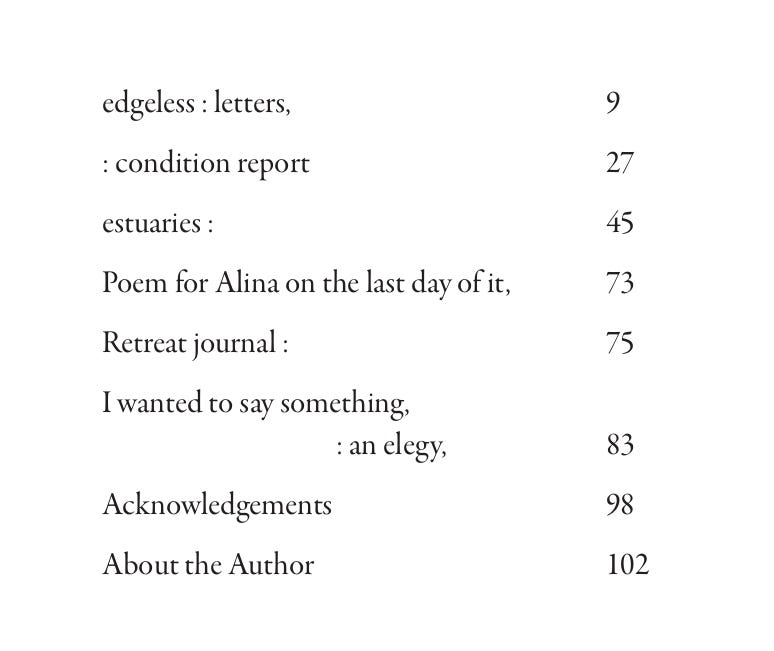
Once that was completed, I returned to “Autobiography,” working one poem at a time, slowly. I allowed “edgeless : letters,” to live as it was, until further ideas or shapes presented themselves to accompany. Eventually, other sequences appeared. “Poem for Alina on the last day of it,” was composed from November 2-27, 2023 and is for Birmingham, Alabama poet Alina Stefanescu, who composed “Poem for Rob on the Last Day of It” after I solicited her for a submission for the weekly “Tuesday poem” series; her poem appeared as “Tuesday poem #552” on Tuesday, October 31, 2023. As with this poem, the first notes of “I wanted to say something” were sketched during time in Orlando, Florida across the first week of November, 2023. Christine and her mother had organized a Florida trip for the whole group (the three of us plus our young ladies) through a full day of Orlando’s Universal Studios and five days of Disneyworld, with a day off in-between. I’d worked for weeks like a maniac to free up an attention span for the trip, bringing a couple of books along for reading or rereading.
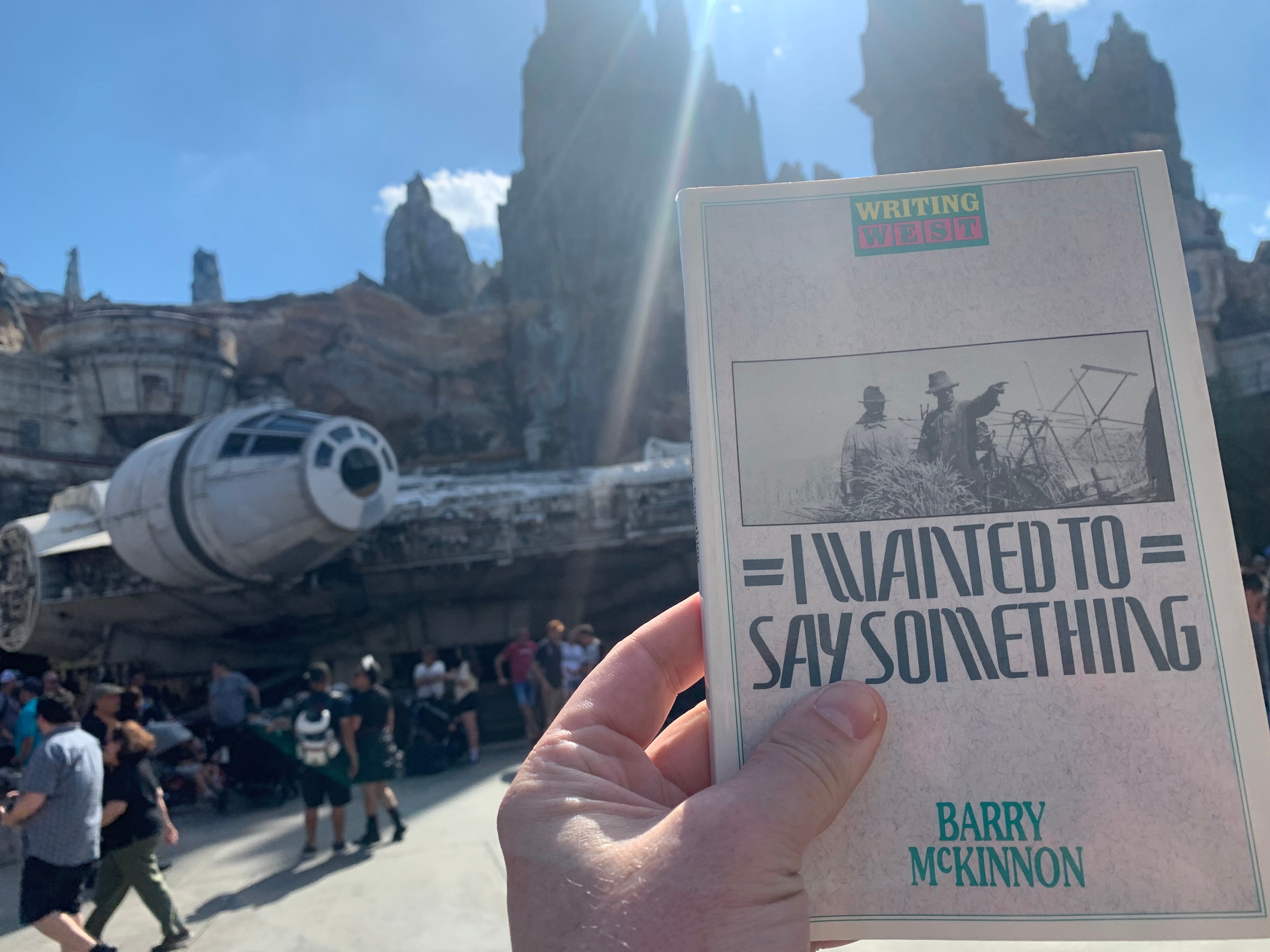
In November 2023, I carried my copy of Barry McKinnon’s reissued I Wanted To Say Something (Red Deer College Press, 1990) through Universal Studios, downtown Orlando and through Disneyworld, mere days after hearing that Barry had died [see my obituary for McKinnon here; see the folio on McKinnon’s work, of which my elegy is part, over at periodicities]. We were a full day at Universal Studios, with McKinnon’s book-in-hand, as I amused myself by catching shots of him on our adventures. Barry McKinnon, with us in the Cantina. Barry McKinnon, by the Millennium Falcon. He was part of our trip, my late mentor and friend. I sent pics via text to amused and slightly confused poet-peers, including Andy Weaver, Stephen Cain and Jay MillAr. Here I am with Barry, see?
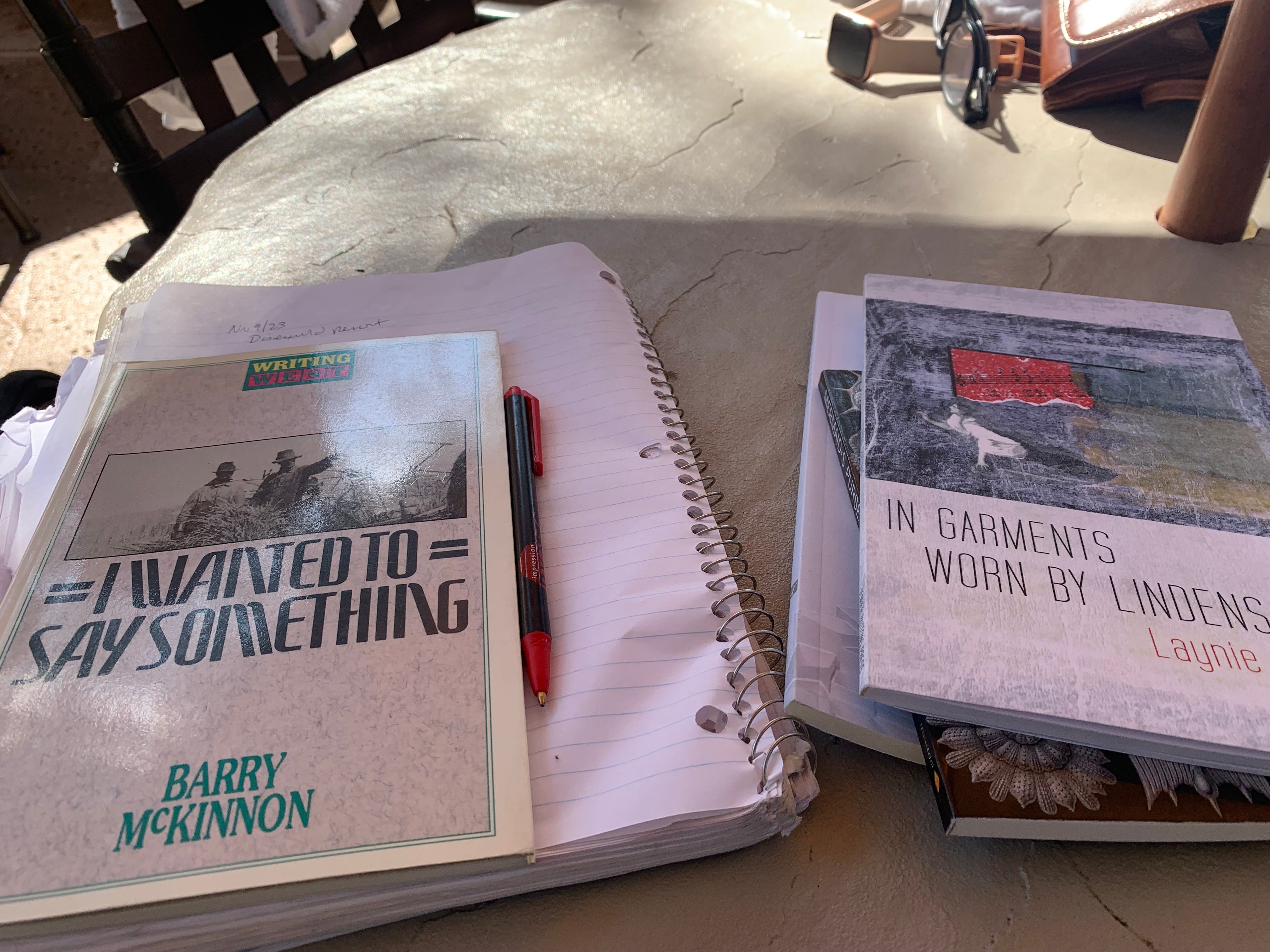
During our one day of respite, between Universal Studios and five days through Disney [see my report on such here], I spent half a day on a deck in Orlando sunshine, responding to Barry and that book through pages upon pages of notes. On that same afternoon deck, I also began my book-length response to Laynie Browne’s In Garments Worn By Lindens (Tender Buttons Press, 2019), the as-yet-unpublished “Fair bodies of unseen prose” [see my note on such here, with selections-in-progress]. That project was larger, and took far longer, only completing that earlier this year. “Fair bodies of unseen prose,” begun on that same Orlando deck, is an homage text for, around and after American poets Laynie Browne and Rosmarie Waldrop, furthering my exploration around and through the lyric sentence and prose poem. All poem titles (which appear in italics above each brief prose poem) are taken in order from the last line or phrase of each poem-in-sequence of Browne’s In Garments Worn By Lindens, itself an homage text to Rosmarie Waldrop, with all of Browne’s titles taken from Waldrop’s Lawn of Excluded Middle (Tender Buttons Press, 1994).
Are all my projects response projects, in their own way? Possibly. I worked on this across months, setting aside my extensive McKinnon notes until returning to salvage such and work into shape across a week at my desk in April, 2024. My Barry McKinnon elegy/sequence made its eventual way as a chapbook through above/ground press in June 2024, just in time for Barry’s memorial in Prince George. The piece was also published simultaneously online as part of a folio celebrating Barry at periodicities: a journal of poetry and poetics, organized and curated by Jeremy Stewart and Donna Kane.
What does a writer do when something happens, whether a death or a birth or some other event? We write it out. If I want to know how I feel or think about something, I’ve learned, the best way for me to discover such is to write it all out.
The “estuaries:” poems were composed from November 2020 to May 2022. It was Denver poet Julie Carr who originally suggested we write poems to prompt each other; that each response include lines by the other. She sent me her poem “River,” and I wrote the first poem of my “estuaries,” which she responded to with a further section of “River,” etcetera. Part of my original thinking on the project included the quote: “I have done nothing but eat dirt and try to keep from being blown away.” It is an excerpt of a 1923 letter by her then-twentysomething grandmother that Julie posted to twitter, around the same time we began our particular call-and-response. I thank her for the original prompt, as well as various ongoing encouragement, conversation, etcetera. Our whole project appeared together in the chapbook river/estuaries (above/ground press, 2023), and a number of her (reworked) poems appeared subsequently in her Underscore (Berkeley CA: Omnidawn, 2024) [see my review of such here].
“Retreat journal :” was first composed in April 2022, in Sainte-Adele, Quebec, a work that sat in my notebook for some time, and then sat on my computer for another stretch of time, requiring an edit, a re-think. A re-work. It appeared as a chapbook through James Hawes’ Turret Press (Montreal QC) in spring 2024. I was curious as to what a prose journal could look like, composed only of singular sentences. I wanted the prose to hold breaks, line-breaks, between. Might there be further across this particular structure?
“: condition report” is my annual birthday poem for 2023, and appeared as a chapbook through Kate Siklosi and Dani Spinosa’s Gap Riot Press (Toronto ON) in summer 2024. It is important to mark birthdays, if possible, and poems aren’t always possible, but if they are, they usually slip into the skin of whatever poetry-related project I’m working on, in the moment. This past year managed to slip right by, as I was working on other things.
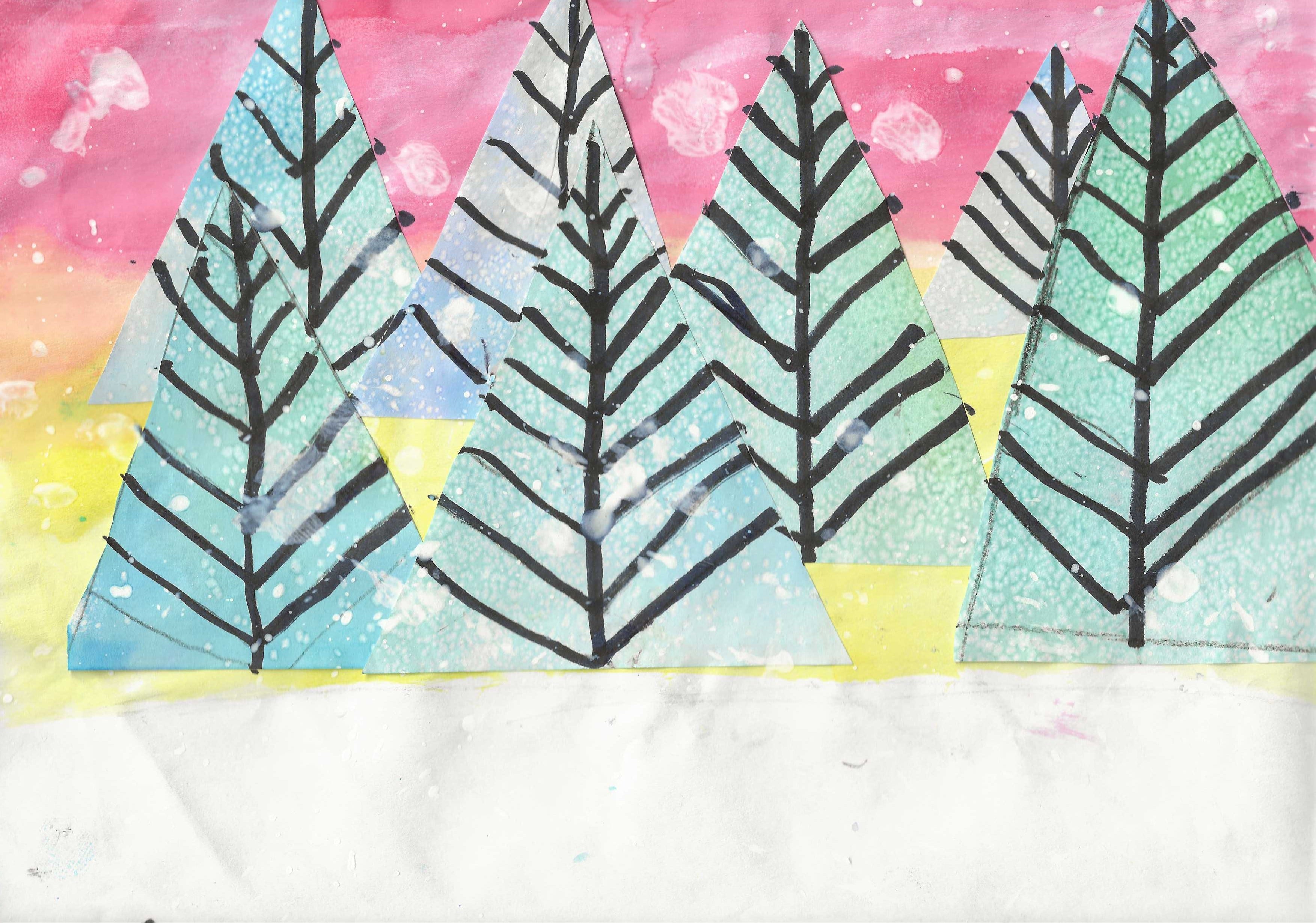
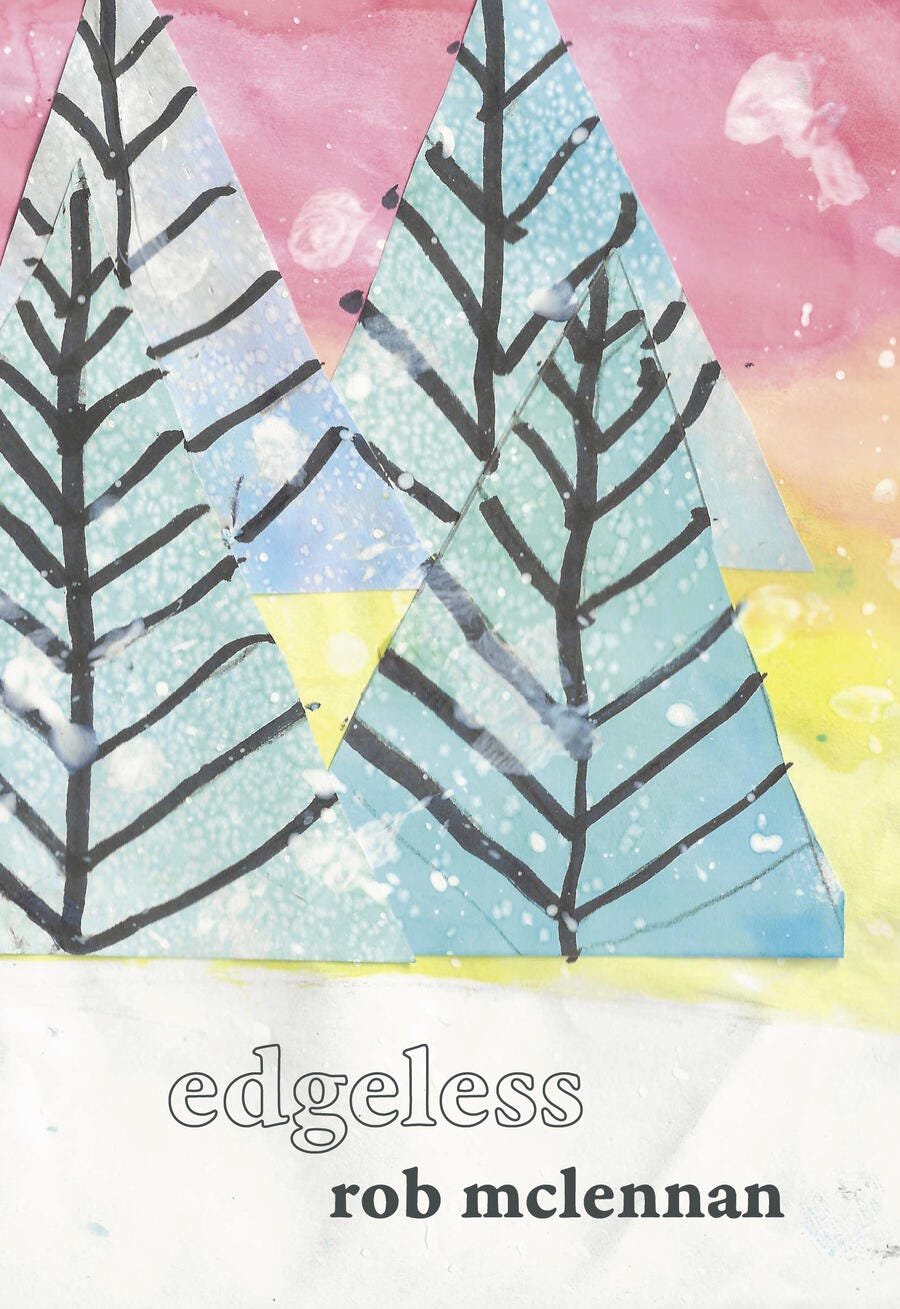
The cover artwork is by my youngest, Aoife, brought home from school sometime across this past winter. It was too interesting an image to pass up. She’s done a couple of covers for chapbooks, but this is her first book. My eldest, Kate, has artwork on a couple of my chapbooks, as well as my poetry title The Ottawa City Project (Chaudiere Books, 2007) and the anthology side/lines: a new Canadian poetics (Insomniac Press, 2002). I’ve used artwork by Rose for a couple of chapbook covers (she sat down to do dozens of images in a single sitting, which I selected for covers-as-needed for months), which was frustrating for Aoife, who wanted her own cover. It directly led to me being briefly overrun by Aoife’s artwork as well, for a while, although I haven’t managed to include any of Rose’s images on a book cover quite yet. If an image fits correctly with a book, it’ll happen. We’ll get there.