


the green notebook,
, further fall 2024: reading Hannah Arendt, Sylvia Plath, Elizabeth Smart, Manahil Bandukwala, Susan Dey + the long shadow of the American Presidential Election,

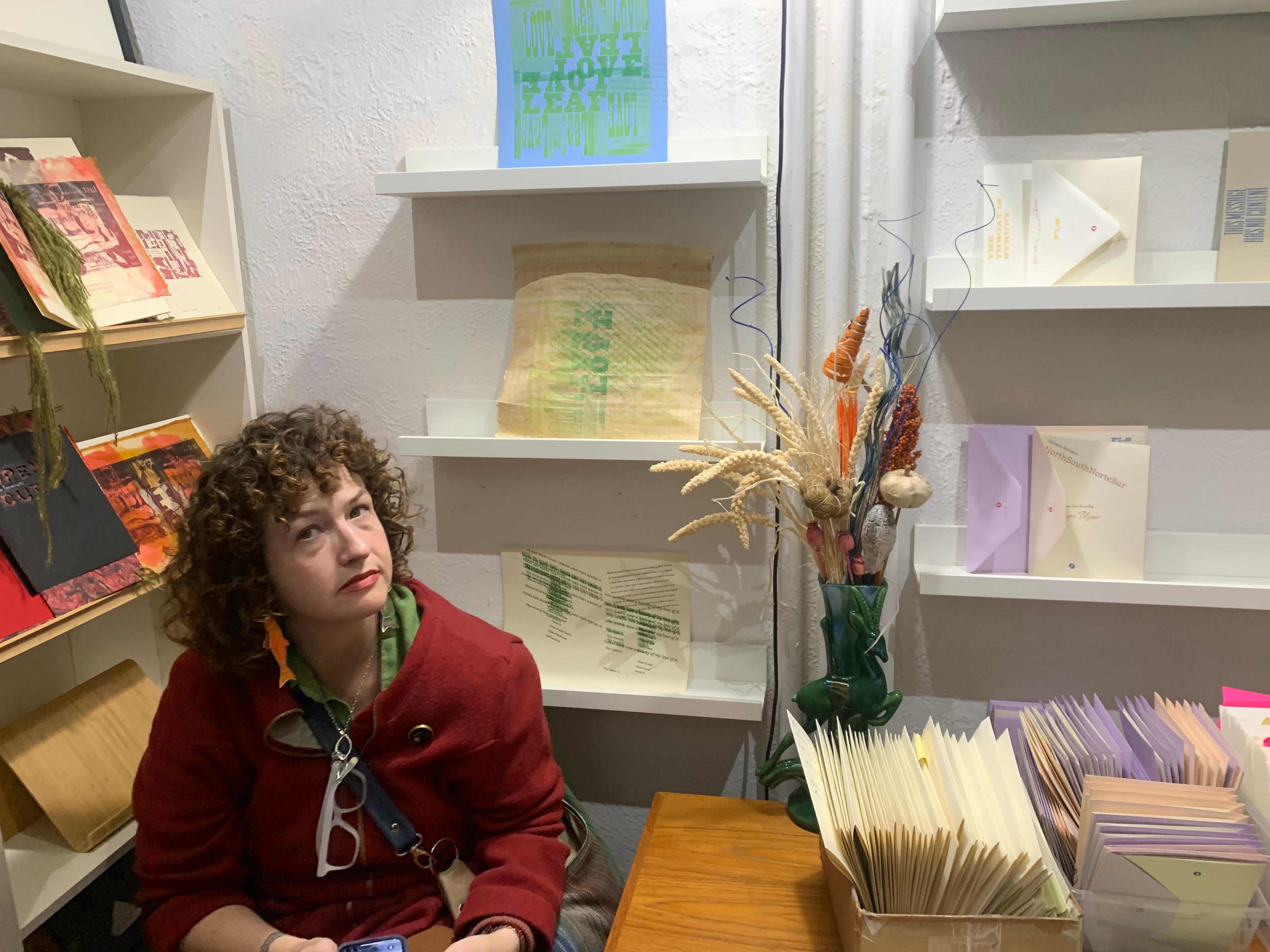
Last night was the American Presidential election, and social media has been awash with quotes, both prior, and since, the results. Someone offers this, from German-American historian and philosopher Hannah Arendt (1906-1975): “The death of human empathy is one of the earliest and most telling signs of a culture about to fall into barbarism.” The bsky account ONLY POEMS @onlypoemsmag provides this Sylvia Plath (1932-1963) quote, from The Unabridged Journals of Sylvia Plath (1982):
Please, I want so badly
for the good things to happen.
I return to Elizabeth Smart’s journals, a selection of such published as Autobiographies (1987), my copy of which I purchased for the bafflingly-low price of four dollars at the University of Alberta Bookstore, some twenty years ago now. I wrote a piece on Smart two years ago recently published in Geist, after Christine had organized a spring photo session for our young ladies in Rockcliffe, one of the city’s wealthier neighbourhoods, just east of the downtown core. It is from these streets where Smart emerged, daughter of a prominent Ottawa lawyer, and attending private school at Elmwood. I hadn’t actually been through those streets prior, and was fascinated at the distance she would have travelled, from Rockcliffe society to giving birth, solo, to her first child in Pender Harbour, on the coast of British Columbia, to being a single mother of four in England while working as a copywriter in London. And writing her diaries, some of which she shaped and reshaped into eventual books, including her infamous novel By Grand Central Station I Sat Down and Wept (1945). Oh, how I wish there were more of her diaries published. If I had infinite time, I’d head into the archives myself and get started. From Autobiographies and sketched out at her home in “the Dell, a remote cottage, accessible only through a gravel pit and across a field, in Flixton, near Bungay in Suffolk,” dated October 21, 1977:
Think of all those old men bashing out their memoirs. Painlessly? Well, absorbed & interested, thumbing through their old diaries. How about mine? Mine do bring things back with great immediacy. Is it of any interest to anyone? To me only slightly. Like those little paintings of Canadian autumns I did—they make me remember the passion to capture it & the ecstatic appreciation of it, & of other huge happinesses too.
Might another pilgrimage be in the books? Head over to England, northeast from London, and see where Elizabeth Smart spent one of the longest stretches of her life, far closer to where she became herself than these Rockcliffe streets. My sequence of pilgrimages have so far included George Bowering’s house in Kerrisdale with Clare Latremouille in 1997, and, accidentally, Molly’s Reach in Sechelt, British Columbia with Michael Barnholden and Joe Blades in 1996, and the Margaret Laurence House in Neepawa, Manitoba with Joe Blades, Robert McTavish, Brenda Niskala and Anne Burke in 1998. There are times I can’t quite believe the adventures literary life has afforded, quite honestly. I haven’t quite made it to Al Purdy’s A-frame in Ameliasburgh, in Prince Edward County, but this past January, I did make it briefly to London, Ontario, as Penn Kemp took me to visit Sheila Curnoe so I could witness the studio of her late husband, the painter Greg Curnoe. Amazing.
In 2014, as Christine, toddler Rose and I inadvertently drove past the Elisabeth Bishop House in Great Village, Nova Scotia. We stopped to look, but the house was not open.
Naturally, I have a churn of thoughts and responses to the results of the American presidential election, but the largest is focused on disappointment. The lack of human empathy, as Arendt said, which applies full well to the current climate, and to that whole culture surrounding that particular candidate. Without empathy, we’re nothing.
*
Ottawa poet Manahil Bandukwala, who landed today on the 2024 CBC Poetry Prize Longlist for her own poem on the spring solar eclipse, suggesting that yes, perhaps all the poets were attempting eclipse poems. An accompanying note by the author via the CBC website provides a context for her piece, as she writes: “The day of the eclipse was also the last day of Ramadan, which leads into Eid, a day of celebration for Muslims. But there’s also a deep grief in the idea of celebrating safely while a genocide occurs, essentially livestreamed onto our phones. This grief, fear, and anger has been a constant state for over a year, for Palestine and Lebanon and Sudan and more. And, I think, is important to hold even as we find our small joys in our lives.”
Any creative act, one might argue, which includes writing, is ever a combination or blend of communication and response, however that might display itself. The notion of the document, the documentary. How we respond to the world, how we attempt to articulate it. In response to the initial backlash declaring legendary American hip-hop group N.W.A.’s lyrics as sensationalizing violence, the group offered, instead, how they were attempting to document the activity they witnessed in their immediate neighbourhood. Very different, they countered, than how it was being depicted by traditional media, or the police themselves. How we might hold ourselves to a standard of speak to what hasn’t been told.
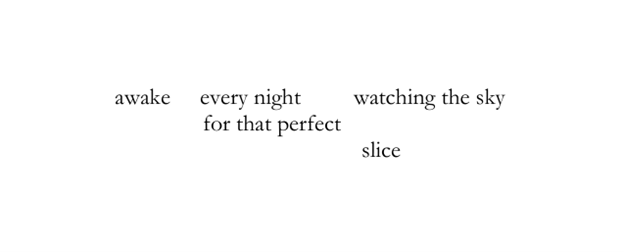
Further, Bandukwala offers via social media, announcing the CBC longlist: “My family joked that I should write a poem about the eclipse and I laughed it off...and then I wrote it anyways.” As her poem offers, writing:
*
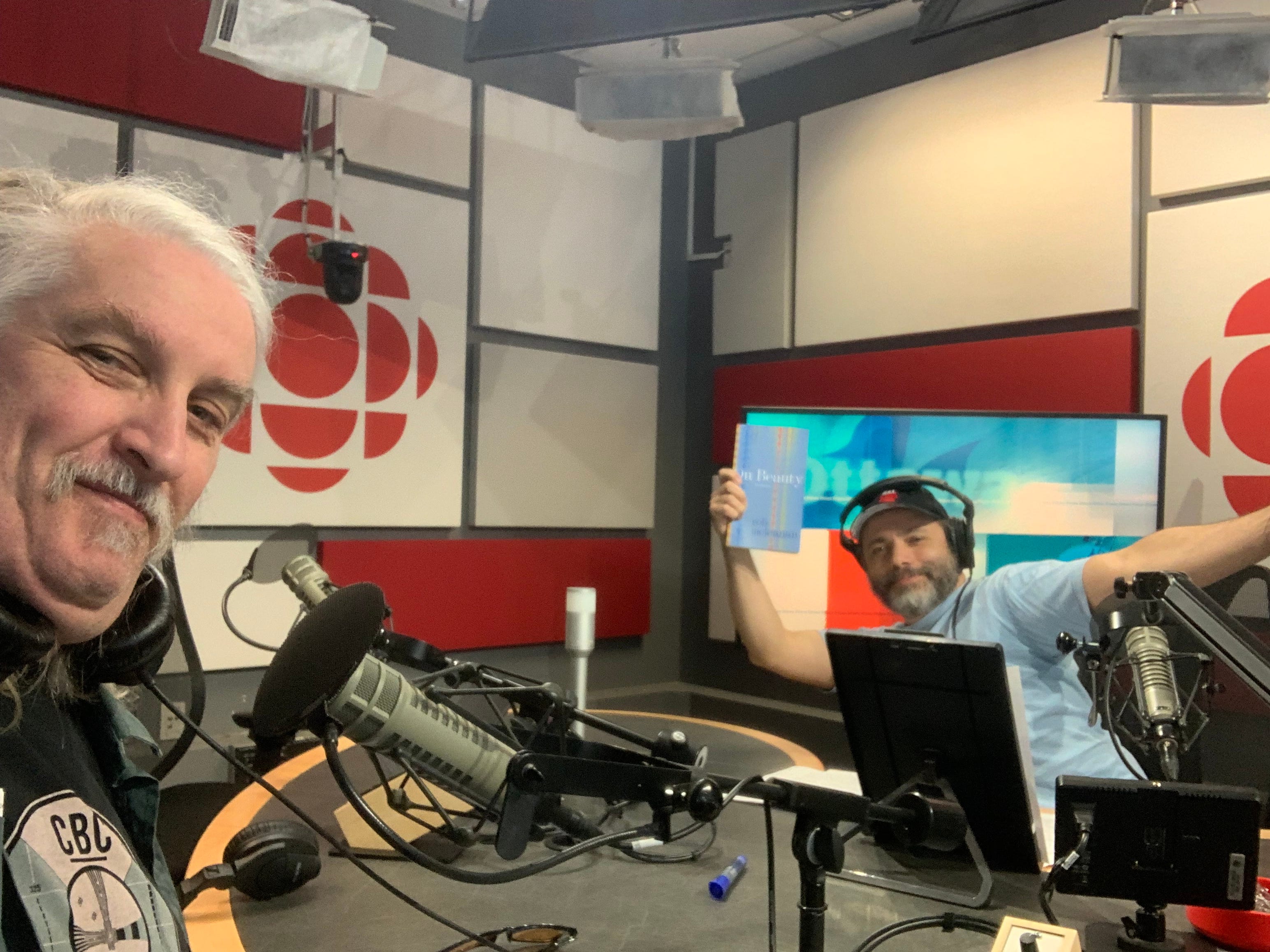
A few days back, I was interviewed by Alan Neal for CBC Radio’s All In A Day for On Beauty, a twelve-minute whirlwind of precise, dense questions around this collection of short stories I suspect he might have understood far better than I. He opened the interview with a song by the Partridge Family, then explaining it emerged from my reference in the collection to American actress Susan Dey, star of the musical-group-within-television-series The Partridge Family (1970-1974). I had referenced a particular character reading Dey’s For Girls Only (1972), a paperback in which Dey “summarizes her personal views on boys, beauty and popularity.” I find it hilarious that Neal catches that particular reference; not necessarily a throw-away, but a specific enough detail to provide the character and backstory a bit of weight. He seemed to marvel at the amount of pop culture references spread throughout, from Susan Dey to Alec Baldwin on Inside the Actor’s Studio and comic book moments. Are all of these pop culture references sitting in your head awaiting release? Possibly.
It was curious to hear from my two initial and anonymous readers, via University of Alberta Press’ peer review system, the amount of baby and birthing references throughout the manuscript, which I hadn’t been conscious of, but made sense, given Rose and Aoife emerged through the seven years of composing that group of stories. What Neal had caught, he said, was the sheer amount of sleep and dream references, which I said I hadn’t been conscious of, immediately realizing the accidental pun slipped in. Well, of course not. He asked: Have you vivid dreams?
I think I do. It isn’t something I’ve really pondered. Dreams thick with detail, narrative, some of which I attempt to recall beyond five minutes after waking up, but of course, they evaporate.