
the banff notebook :
, eleven days in may (part one,

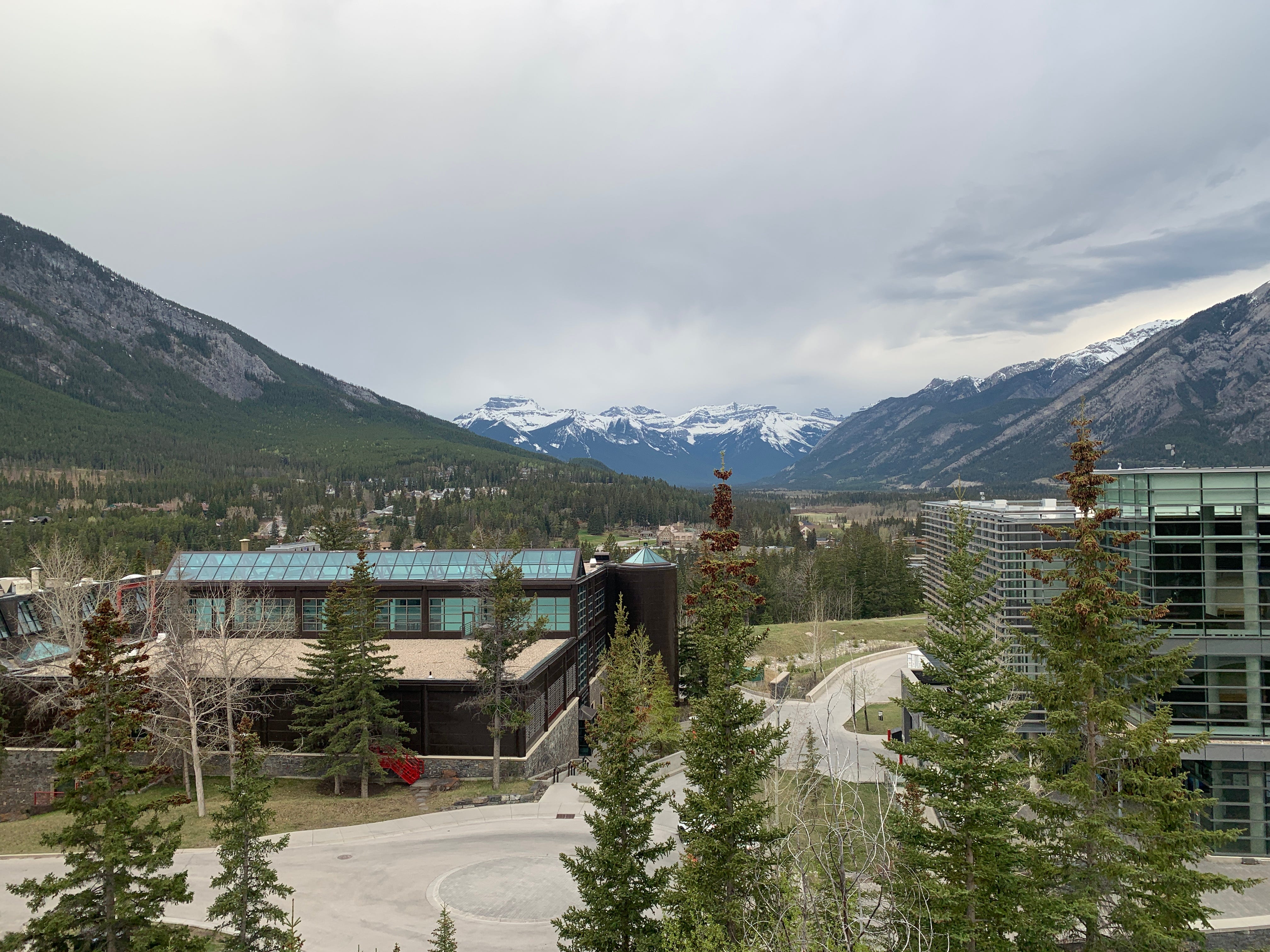
A mountain is a rock is a scenic viewpoint ahead.
Jordan Abel, Dad Era (2026)
Banff Centre of Arts and Creativity, for the sake of a week, as part of the fiftieth anniversary of the University of Alberta writer-in-residence program. I am here to finish a novel. I am here to hang out with writers. I am here to attempt to catch my breath.
Through the hour-plus of the shuttle, from the grounds of the Calgary airport en route through Canmore to eventual Banff, further up to the Banff Centre, I realize I should attempt to discern how my character Alberta, raised in a fictional Lumsden, Saskatchewan, might articulate a description of sky. Alberta, one of the cornerstones of this novel-in-progress I am attempting to focus on while I’m here. How might one from the Qu’Appelle Valley describe that Saskatchewan sky? Montana, they say, is Big Sky Country. But that is a whole other country. What particular vernacular might this character, raised in 1970s and 80s Saskatchewan, have absorbed? A vocabulary, there in her bones. The official slogan of Saskatchewan is “Land of the Living Skies,” although to have her speak such might sound false, or put on. You could watch your dog run away for three days, said Saskatchewan poet John Newlove (1938-2003). As he said, somewhere. I can’t recall where.
I was in Edmonton as writer-in-residence from September 2007 through to the end of May 2008, a full academic year. I had an office of my own for the very first time, where I spent the length and breadth of my writing day, seven days a week. Where else would I go? I was publishing out of my office, blogged about Edmonton literary events and started a monthly reading series. I hadn’t attended much post-secondary, so the experience of the campus, the department, was entirely new. A way to stretch my boundaries, with little expected of me but ten percent of my time for the students, who didn’t even require me that much.
This residency, this experience, altered the trajectory of my writing in ways I’m still feeling out. A broader turn into prose, and the confidence boost of the position. Nine months of a paycheque with benefits that offered a sustained writerly attention above and beyond mere notions of survival. The years I’d been perpetually behind on rent, never sure of my next meal. The residency provided nine months of relative financial stability, which allowed me sustained thought, for the first time in years. Since landing in the capital at nineteen, this was an entirely new geography and landscape at thirty-seven, and with that, the possibility of an entirely new context.
An attention to prose, and the prose sentence, the lyric sentence. Alberta provided a turn from the lyric fragment into something longer, more sustained. The beginnings of moments that evolved into my collection of short stories, On Beauty (2024). Where else might this lead.
As I head further north, further west, up into the mountains. This scheduled week alongside an array of other Canadian writers, most of whom had also held the same writer-in-residence position: Thomas Wharton, Fred Wah, ryan fitzpatrick, Cody Caetano, JR Carpenter, Daphne Marlatt and Hiromi Goto. The upcoming writer-in-residence, Jana Pruden. University of Alberta English and Film Studies faculty Jordan Abel, Conor Kerr and Marilyn Dumont. Graduate students Julianna Wagar and Jason Purcell, a remarkable poet as well, both of whom were attending organizational details for this herd of literary cats. Calgary writer Joshua Whitehead included to represent the program’s connection to the University of Calgary. Makda Mulatu and Kaitlyn Purcell, attending as two emerging poets recently mentored through the writer-in-residence program. Derek Beaulieu in the background, from his office, from where he runs Banff’s Literary program.
*
Every ten years, it would seem, this celebration of the longest-running writer-in-residence program still operating in Canada. In 2016, a deeply pregnant Christine accompanied me to Edmonton for a mini-conference of literary writers, as Thomas Wharton had invited most of the writers across those first four decades of the program. There were numerous readings, panels and gatherings both formal and informal across a handful of days. From my notes at the time, the list of writers included Gary Geddes, Tom Wayman, Daphne Marlatt, Leona Gom, Fred Wah, Kristjana Gunnars, Di Brandt, Marilyn Dumont, Caterina Edwards, Curtis Gillespie, Merna Summers, Trevor Ferguson, Thomas Wharton, Catherine Bush, Tim Bowling, Tim Lilburn, Richard van Camp, Marina Endicott, Don McKay and Erín Moure. Originally Fred Stenson was scheduled to participate as well, but, unfortunately, illness managed to knock him out for the exact days of the event.
This current week, far less formal than the 2016 event. No panels, no multiple readings, but a single event, scheduled both in-person and livestream. A marathon, if you will.
*
I will do no travel writing, another writer once told me. How one can’t help but ‘other’ a place, or a landscape, or a culture, and thus, miss entirely what connects, focusing first on what separates. To not wish to romanticize, or misrepresent.
In 2008, I attempted a sequence fragment “the Banff sessions,” a self-contained and failed lyric riff off The Peel Sessions, echoing all the writing that may have come from this particular landscape, this space. How might one best replicate the infamous “wall of sound” via text? My two days in one of the studios, not enough time to even land. What was even the point. I had been offered a week at the Banff Centre as part of my writer-in-residence gig, but hadn’t been informed of this until January, so by that time, the only place where their schedule and mine might meet fell across two days. Two days of a writing studio of my very own. It almost took more time to get there.
The notes from those days are scant, unformed. Pages I have but a shadow of recollection of writing out, nineteen typed pages lifted clean from the archaeology of my hard drive. The only salvageable excerpt, pulled out of context:
all my language falls apart
I first introduced the teenaged character Alberta through my second novel, Missing Persons (2009), articulating the two years beyond the death of her father, which occurred just prior to the book’s opening. She returns as an adult to certain threads of my short story collection On Beauty, with ailing husband and teenaged and then twentysomething daughter who shifts to non-binary. This current novel-in-progress furthers Alberta’s particular thread, landing as grandmother, and widowed for some time, although that second step had already been suggested. Who is she now, you might ask. You might wonder.
From this shuttle window, along one side of this airport road, I catch a pair of Richardson’s ground squirrels, scampering from fence-line to highway boundary. They look similar to the prairie dogs of American television, surveying their immediate landscape on hind legs. Along grassy knolls that border the highway, it seems a dangerous location for them to play. Be safe, little ground squirrels. A few metres on, a local magpie, who cares nothing for their scamper.
I swear I could see a castle within that blush of white cloud.
A construction sign along the highway. Whereas at home, a similar sign would read “Construction Ends,” but here, the switch, of “End Construction.” As though some kind of protest sign, against the notion of building, rebuilding, what have you. Damn you, construction. You will destroy no more lives, no more. Not on my watch.
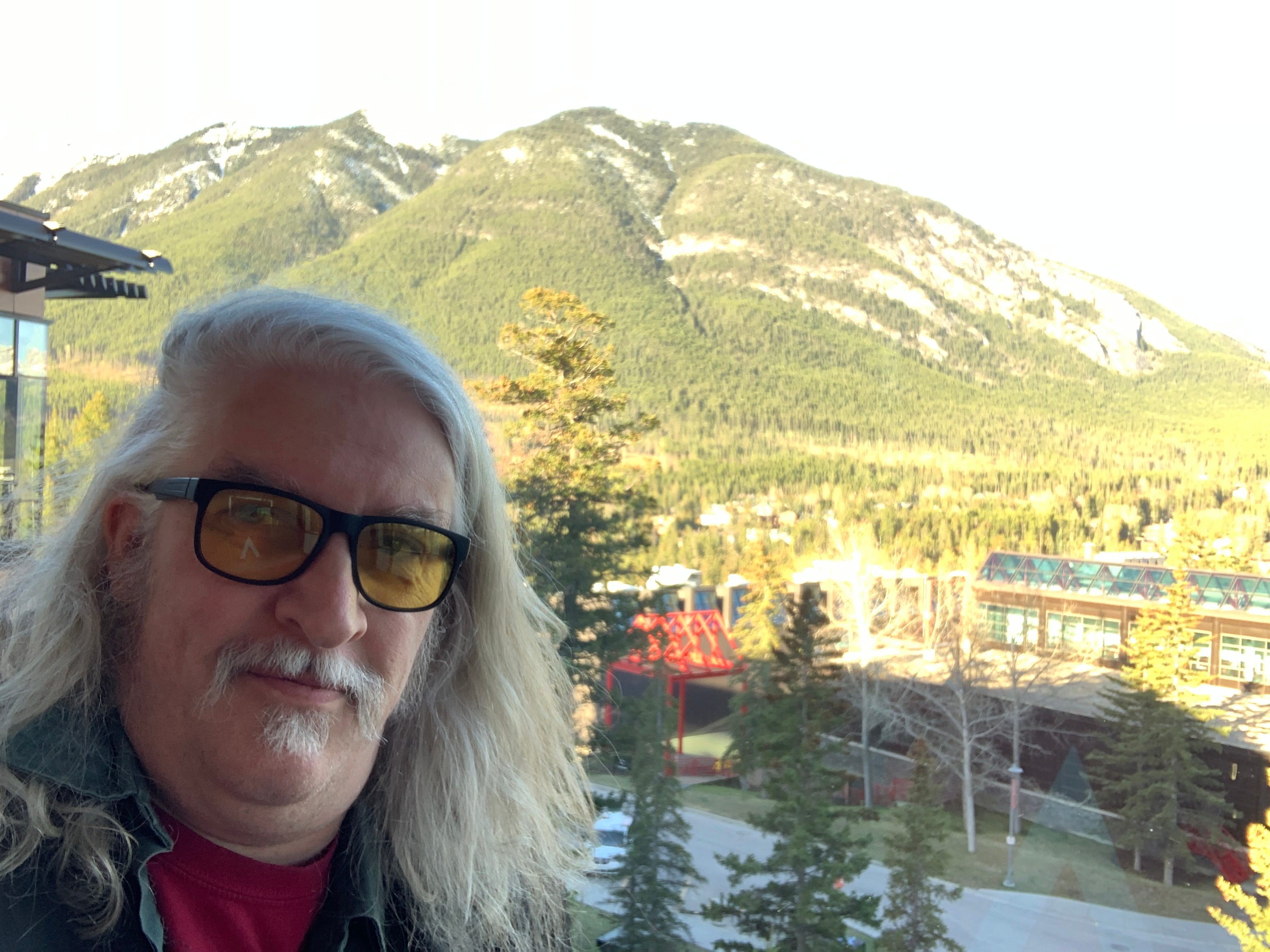
Banff has always been on my wish list. Maybe one day I'll win the lottery or the CBC prize to get there. I can dream...
My last visa bill says I am a paid subscriber.